Reverse Archaeology, 2010
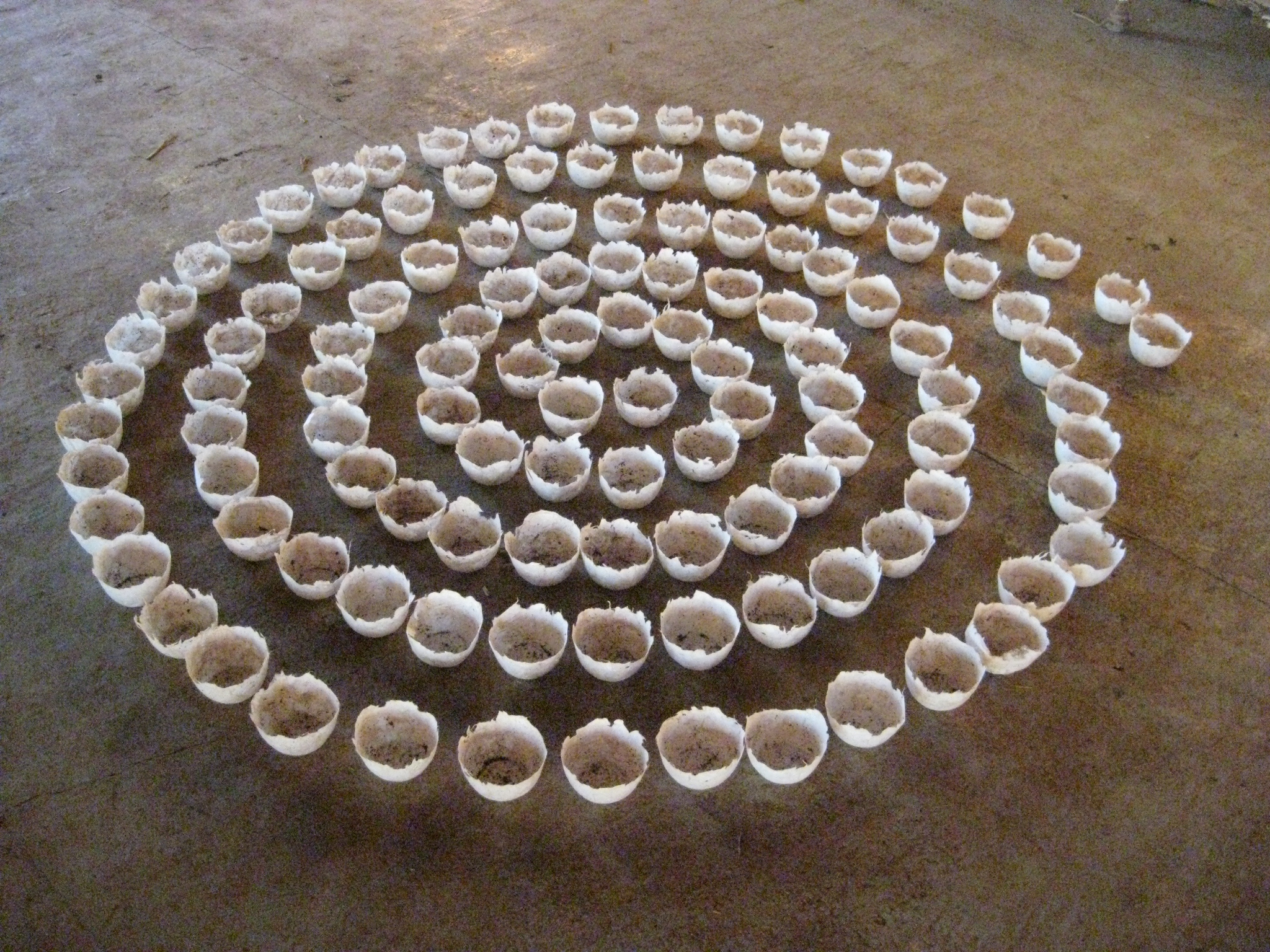
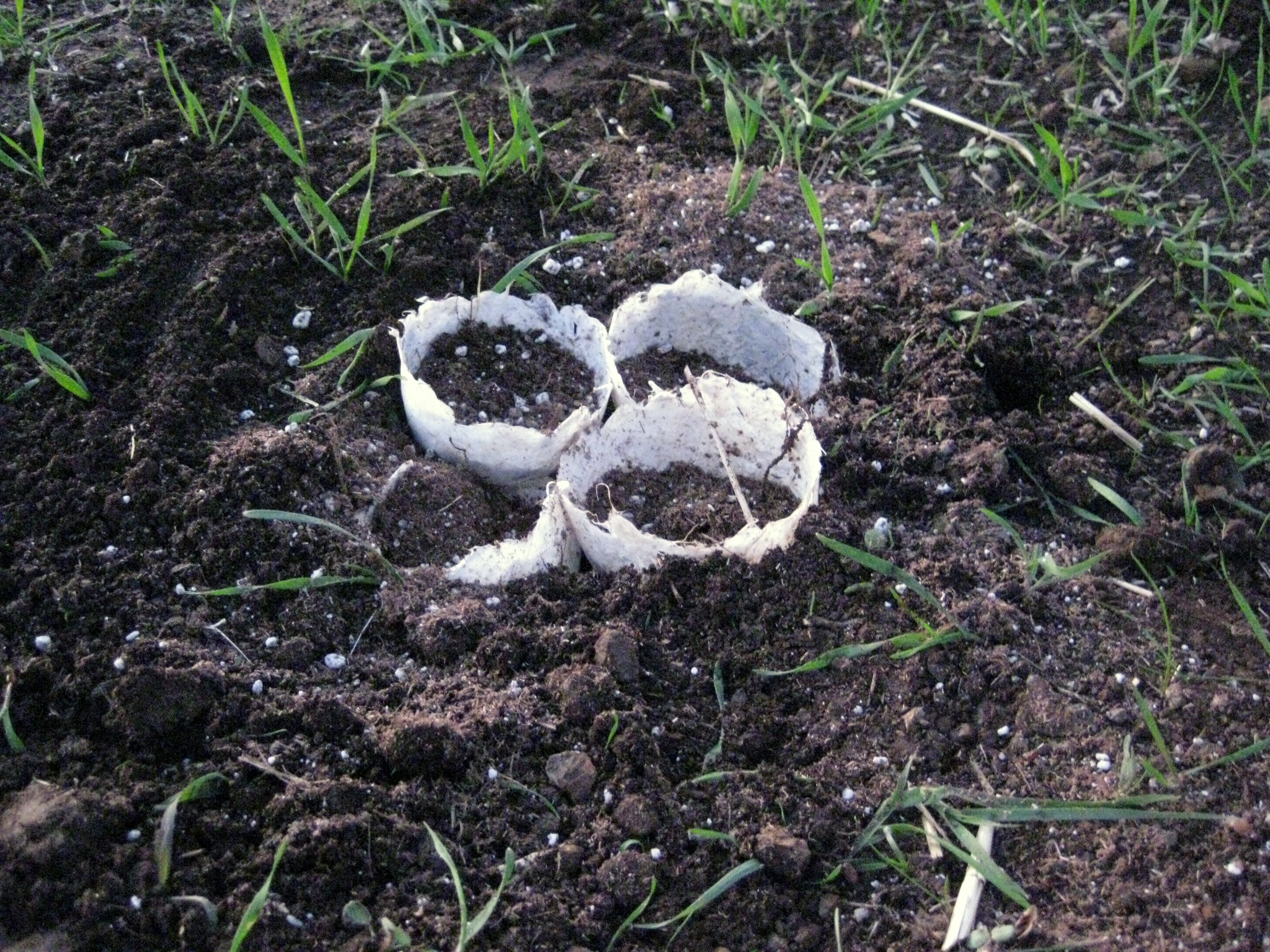
Installation at the Life is Art Foundation, Santa Rosa, CA. 4 ft x 4 ft x 5 in, performative installation of cast paper vessels infused with native seeds, vessels were displayed indoors than carried outside and buried in the soil in an archaeological grid.
Land Art at its impetus was criticized for utilizing destructive processes such as excavating wide cavities in fragile landscapes (Heizer) or using dynamite to structure it into a desired form (Smithson). In effect, it could be said that the original Land Artists viewed the landscape similar to modern developers – something to be shaped and plundered, a resource for exploitation. The movement has since evolved, however, I seek to question this lingering viewpoint of and itself as something from which humans constantly must take from.
Another influence of Land Art has been Pre-Columbian artifacts and architecture. As much as I have always enjoyed visiting archaeological museums, I must acknowledge that the practice of archaeology is a form of modern grave robbing. The basis of its philosophy is that by examining the relics of the past, we reveal insights into our present. However, the ethical controversy remains for numerous non-Western peoples that their ancestral burial grounds and sacred sites have been raided and violated. Perhaps discoveries lie more in our methods of unearthing the past – who is doing the digging, and what are they looking for? Which raises the question, does Western imperialism and colonialism extend even into non-Western indigenous histories? Why writes these histories? Are we raiding the past so that we can re-write it?
This project took the form of an institutional critique, asking participants to consider ideas of both Land Art and archaeological ethics, and then to de-excavate something. These vessels were made from compostable, handmade paper from the agricultural byproducts of plants harvested on the land of the Life is Art Foundation, and infused with native wildflower seeds. I asked participants to bury these vessels, returning them to the earth, where the paper biodegraded and the seeds grew. There, the traces of their existences dissolved and the seed grew. In archaeology, the search is for evidence, while in this project, the earth itself becomes the evidence.
Click on any image below to enlarge and open a slideshow.